
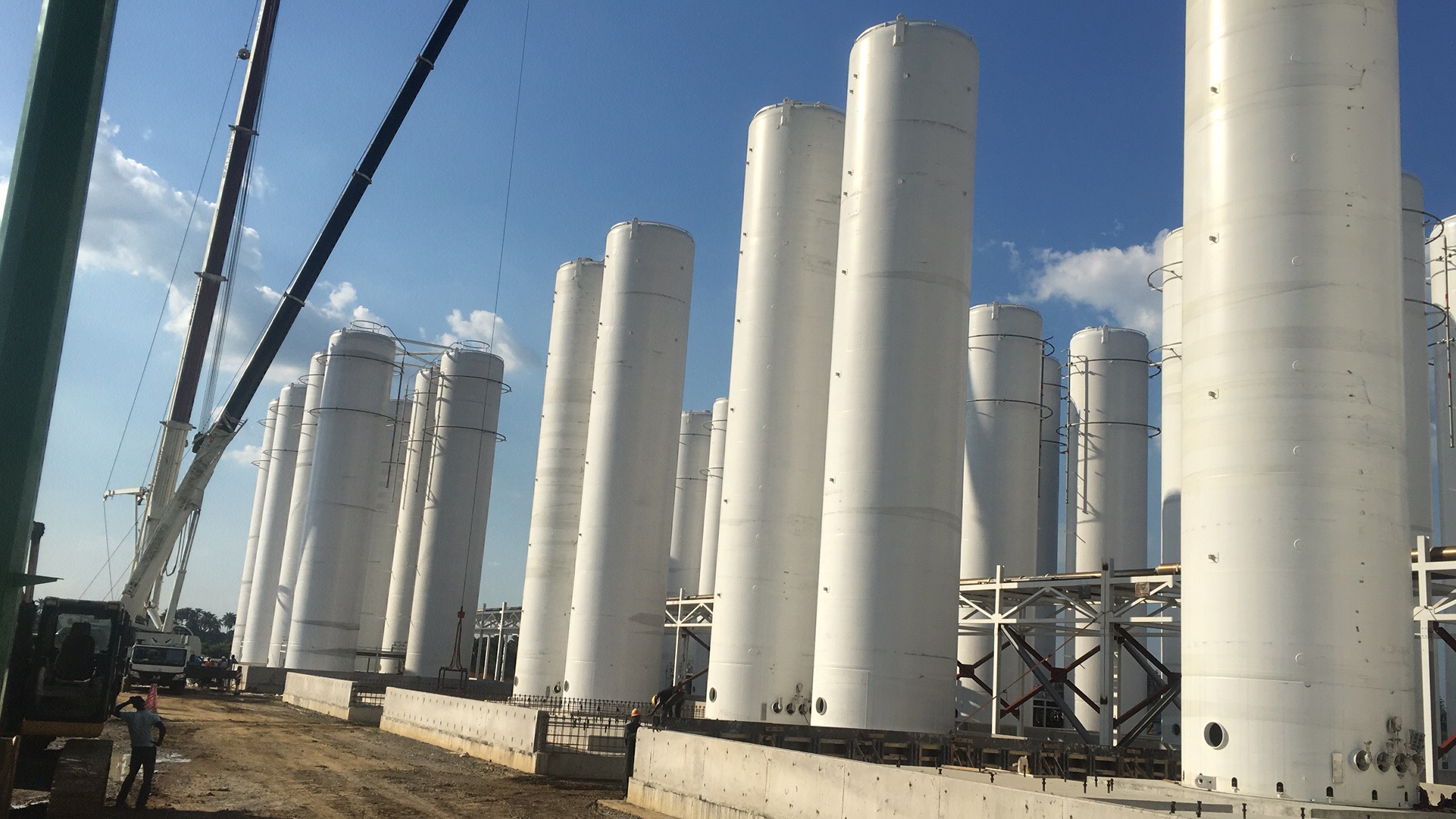
With the development of cryogenic technology, the preparation and storage of liquid gases (liquefied natural gas, liquid oxygen, liquid nitrogen, liquid argon, liquid carbon dioxide, etc.) have been widely used in many other industries. The resulting low-temperature liquid oxygen storage tank is a pressure vessel for storing liquid oxygen, and is also widely used in steelmaking plants, hospitals, food and beverage industries, electric welding and other industries.
At present, the oxygen supply method of hospitals and hyperbaric oxygen chambers has gradually changed from oxygen cylinders to liquid oxygen storage tanks.
Where conditions permit, liquid oxygen has been used for oxygen supply. Therefore, with the wide application of liquid oxygen storage tanks, we should pay more attention to safe use of liquid oxygen storage tanks.
The liquid oxygen storage tank is a stationary pressure vessel. According to the user's land area, it can be designed in two types: vertical and horizontal to meet the needs of different users. The main body of the tank is a double-layer structure, the inner liner and piping are made of austenitic stainless steel, and the outer shell is generally made of Q245R or Q345R carbon steel plate.
Since the temperature difference between the inner and outer layers can reach 200°C, it must be strictly insulated. In addition to measures such as structural suspension and process polishing, the insulation of the interlayer is particularly important. The insulating interlayer of the produced liquid oxygen storage tank is filled with pearl sand and evacuated, and its vacuum degree is higher than the standard requirement. The working pressure of the inner tank of the storage tank is 0.8MPa and 1.6MPa. Within the allowable working pressure range of the storage tank, the pressure can be adjusted according to the needs of use.
Once the vacuum degree of the liquid oxygen cryogenic storage tank is destroyed, it cannot store liquid oxygen. The outer cylinder explosion-proof device and the vacuum valve of the liquid oxygen storage tank are directly connected to the vacuum interlayer, so when the vacuum degree of the interlayer is not destroyed, or it is not necessary. When re-evacuating with the supplementary pearl sand, the vacuum device should not be disassembled. The vacuum valve has been sealed with lead when the liquid oxygen storage tank leaves the factory, and the user should not be disassembled at will, otherwise the vacuum environment of the interlayer of the liquid oxygen storage tank will be damaged.