
There are two traditional cleaning methods for rubber molds: one is the mechanical cleaning method, which uses manual abrasive cloth or steel wire physical grinding and dry sandblasting. Different combinations of cleaning can be selected according to needs. The mechanical cleaning method is a mature technology and is widely adopted by the mold industry. This method has the advantages of simple and easy implementation, low requirements for equipment and tools, but it also has insurmountable defects, which can cause mechanical damage to the mold and shorten the life of the mold; sandblasting can easily block the vent of the mold, and clear the exhaust after sandblasting. The workload of the stomata is very large. The mold must be disassembled, resulting in high labor intensity and long cleaning cycle. The other is the chemical cleaning method. The chemical cleaning method mainly includes: organic solvent method, melting method, pickling method, alkaline washing method, etc. These methods are easy to use and low in cost. However, long-term use of the above methods will cause corrosion of the mold, which directly affects the appearance and quality of the product. At the same time, these pharmaceutical raw materials pollute the environment and harm the health of the operators. Complete labor protection methods and pollutant treatment equipment must be provided. Therefore, in the current industrial cleaning, mold cleaning urgently needs an online cleaning method that can replace the traditional cleaning method.
Mold cleaning is a key process in mold maintenance and a bottleneck restricting mold maintenance. Now, the time spent cleaning templates and mold components have greatly exceeded the man-hour used in all other maintenance operations (disassembly, debugging or assembly). This is mainly because: On the one hand, cleaning the templates and molds maximizes the service life of the molds , The key to improve the reliability of molds and ensuring product quality; on the other hand, most molds are still cleaned manually. At present, the speed of mold manufacturing and development in China is much faster than that of mold cleaning, and the mold must be ready for the next production immediately after rapid cleaning, so the time left for mold cleaning is quite limited.
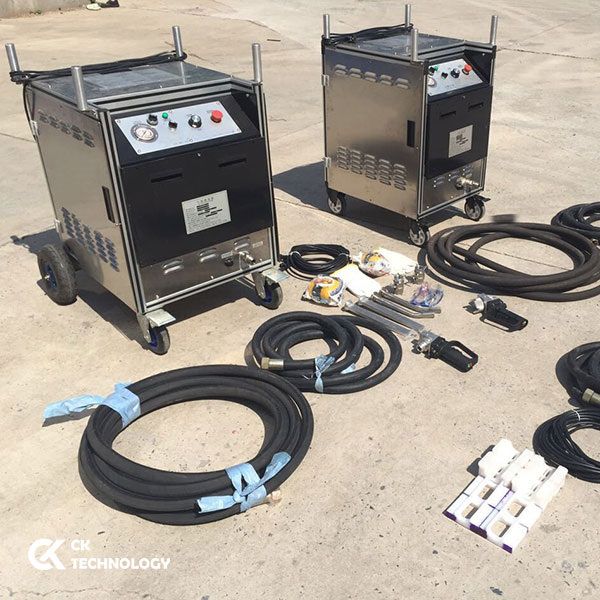
With the continuous development of science and technology, some new technologies are constantly being developed and applied. These cleaning technologies will bring a “revolution”to the mold cleaning industry that has received much attention. Dry ice blaster technology is a brand-new cleaning technology for mold surface dirt, which is widely used in petrochemical, rubber and plastic mold industries. Compared with traditional methods, it has better safety and excellent environmental protection for personnel, equipment and environment. The recycling and utilization of carbon dioxide as an environmental protection technology has also been gradually recognized by international equipment. Dry ice cleaning machine is a cleaning method with the most development potential in the mold cleaning industry. It completely solves the history of using great power to clean molds. Dry ice cleaning technology is a dry ice maker to prepare dry ice particles of a certain specification, dry ice solid particles Driven by compressed air, the nozzle of the dry ice blasting machine impacts the surface to be cleaned at high speed.The dirt layer on the surface is extremely cold and brittles and cracks. The adhesion to the mechanical parts is greatly reduced. The crushed dry ice particles enter the cracks quickly. Sublimation, the volume instantly expands 800 times, which causes a "micro explosion" at the impact point, which quickly peels off the dirt layer to achieve the best effect. As a new type of cleaning technology, dry ice cleaning has been widely used in various major industries. We can also tailor a dry ice cleaning system suitable for enterprise integrated operation for enterprises, which is integrated in the entire production line to solve Greater development in the process of enterprise integration.