
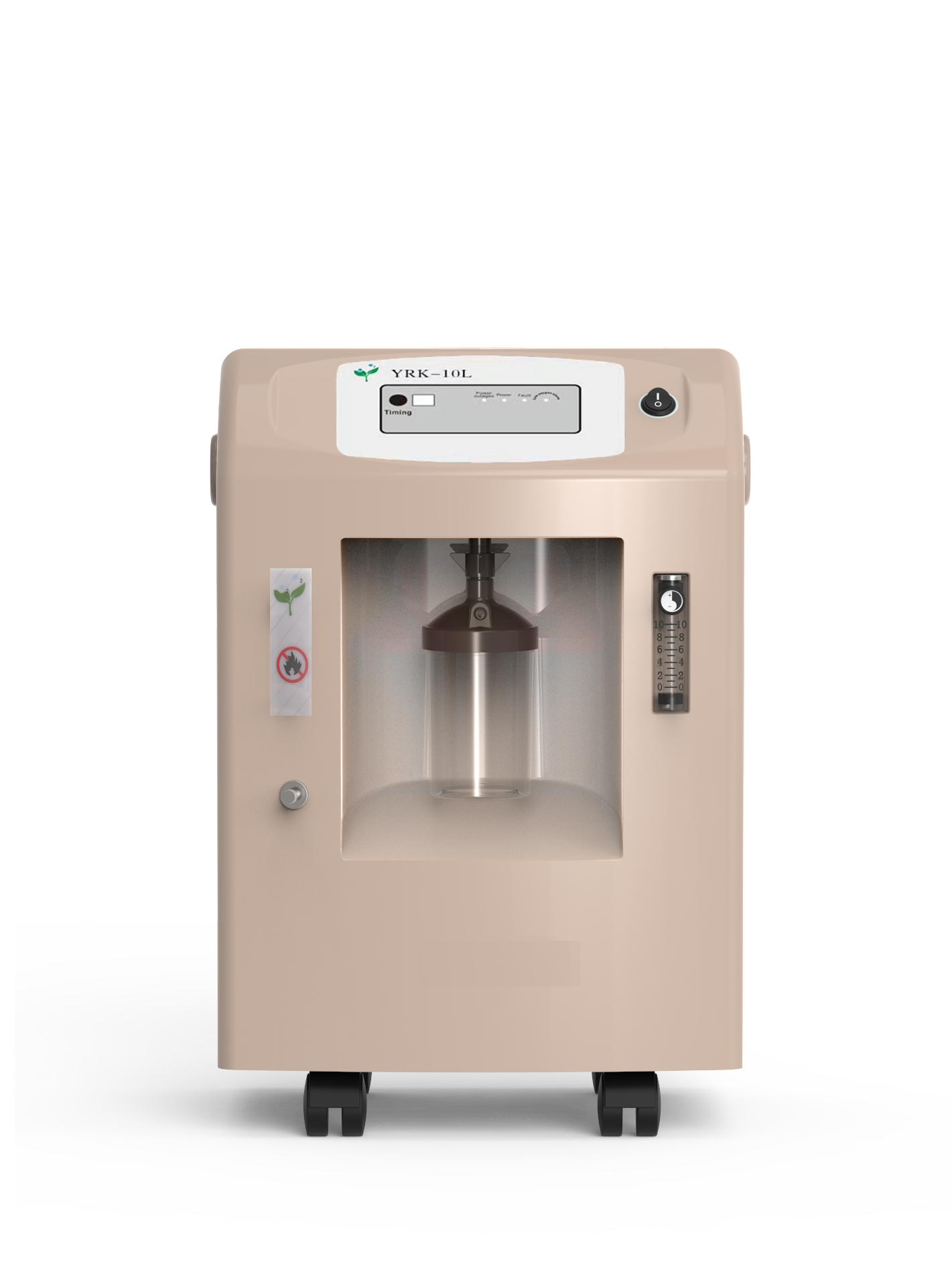
Does your oxygen generator produce oxygen or "air"?
In recent years, the quality problems of home oxygen generators have emerged one after another. Just in February this year, the State Food and Drug Administration's sampling data showed : some oxygen generators did not meet the standard due to the oxygen concentration; the quality of the oxygen generator shell was not up to standard, as well as items such as labels and manuals. They are recalled because of not meeting the standards.
As early as 2008, there was a case in Zhejiang where the oxygen concentration inhaled by the patient was only 18% due to the problem of using the mask during the rescue of a critically ill patient, which eventually resulted in the death of the patient. Hunan's "Escientific Investigation" program also exposed that the oxygen generator of the Fourth People's Hospital of Chenzhou City was unqualified, and the oxygen concentration was only 54%.
It can be seen that in the process of patient treatment, the importance of oxygen concentration. The oxygen concentration is related to the life of the patient, and there is no room for sloppy.
Is the oxygen concentration of your oxygen generator qualified?
The above situation of "substandard oxygen concentration" not only occurs in hospitals, but also occurs frequently in home oxygen concentrators. The state stipulates that the oxygen concentration of medical-grade oxygen generators needs to be stabilized at (90±3)%, that is, the oxygen concentration should be stabilized between 87% and 93%. The oxygen concentration standard of imported oxygen generators is slightly higher than the oxygen concentration standard stipulated in my country. , the oxygen concentration is generally stable at (93±3)%, that is, the oxygen concentration is between 93% and 96%.
When the oxygen flow rate is 1L/min, the oxygen concentration of many household oxygen generators can reach 90%; when the oxygen flow rate is 2L/min, the oxygen concentration is 50%; when the oxygen flow rate is 3L/min, the oxygen concentration is 40%; when the oxygen flow rate is 4L/min , the oxygen concentration is 33%; when the oxygen flow is adjusted to 5L/min, the oxygen concentration is only 30%. Therefore, as the oxygen flow increases, the oxygen concentration decreases, and the oxygen generator that cannot be stabilized between 87% and 90% cannot meet the medical-grade standard. For the treatment of respiratory system such as COPD and emphysema Illness doesn't matter.
For example: COPD patients need continuous low-flow and low-concentration oxygen inhalation for more than 15 hours a day. However, if an oxygen concentrator with substandard oxygen concentration is purchased, the effective oxygen concentration may be inhaled in the first 7 hours, and the next 8 hours. The oxygen concentration inhaled is close to "air".
Inhaled oxygen concentration is what you should be concerned about.
Taking COPD patients as an example, the inspired oxygen concentration of COPD patients needs to be between 29% and 35%, and it needs to be kept in this range stably for a long time to achieve the effect of long-term oxygen therapy. We have a formula for the effective oxygen concentration inhaled into the lungs. The formula is to inhale oxygen with a nasal cannula, and when the oxygen concentration is stable at 90%, the effective oxygen concentration in the lungs = 21% + 4% × oxygen generator Turn on flow. (Example: The oxygen generator flow rate is 5L/min, the effective concentration in the lungs = 21+(4×5)%, that is, the effective oxygen concentration inhaled into the lungs is: 41%)
After professional formula conversion, it is easy to determine whether the oxygen generation mechanism you choose is "air" or oxygen.
Oxygen concentration lacks regulatory 'last mile'
The state has clearly stipulated in the production license of oxygen generators: the oxygen concentration within the rated range of the oxygen generator should be greater than 90% when leaving the factory, and it has its own oxygen concentration detection function. When the oxygen concentration is lower than 82%, it should be stopped. Maintenance inspection. But in reality, there is a lack of "the last mile" in oxygen concentration detection. In the process of using the oxygen generator, the country lacks corresponding testing institutions, and many consumers mistakenly think that as long as the oxygen generator is running, the produced oxygen is qualified oxygen.
The oxygen concentration is stable at more than 90%, which is the standard for home oxygen therapy.
At a time when more and more COPD patients choose to receive long-term oxygen therapy, 78% of them do not correctly implement long-term home oxygen therapy, and the proportion of choosing the wrong oxygen generator is even higher.
For a qualified oxygen generator, no matter how long the startup time is, the oxygen concentration can be stable at more than 90% without any attenuation. In this way, the efficacy of long-term oxygen therapy can be guaranteed.
Therefore, choosing an oxygen generator with better function becomes the basis of long-term oxygen therapy.