
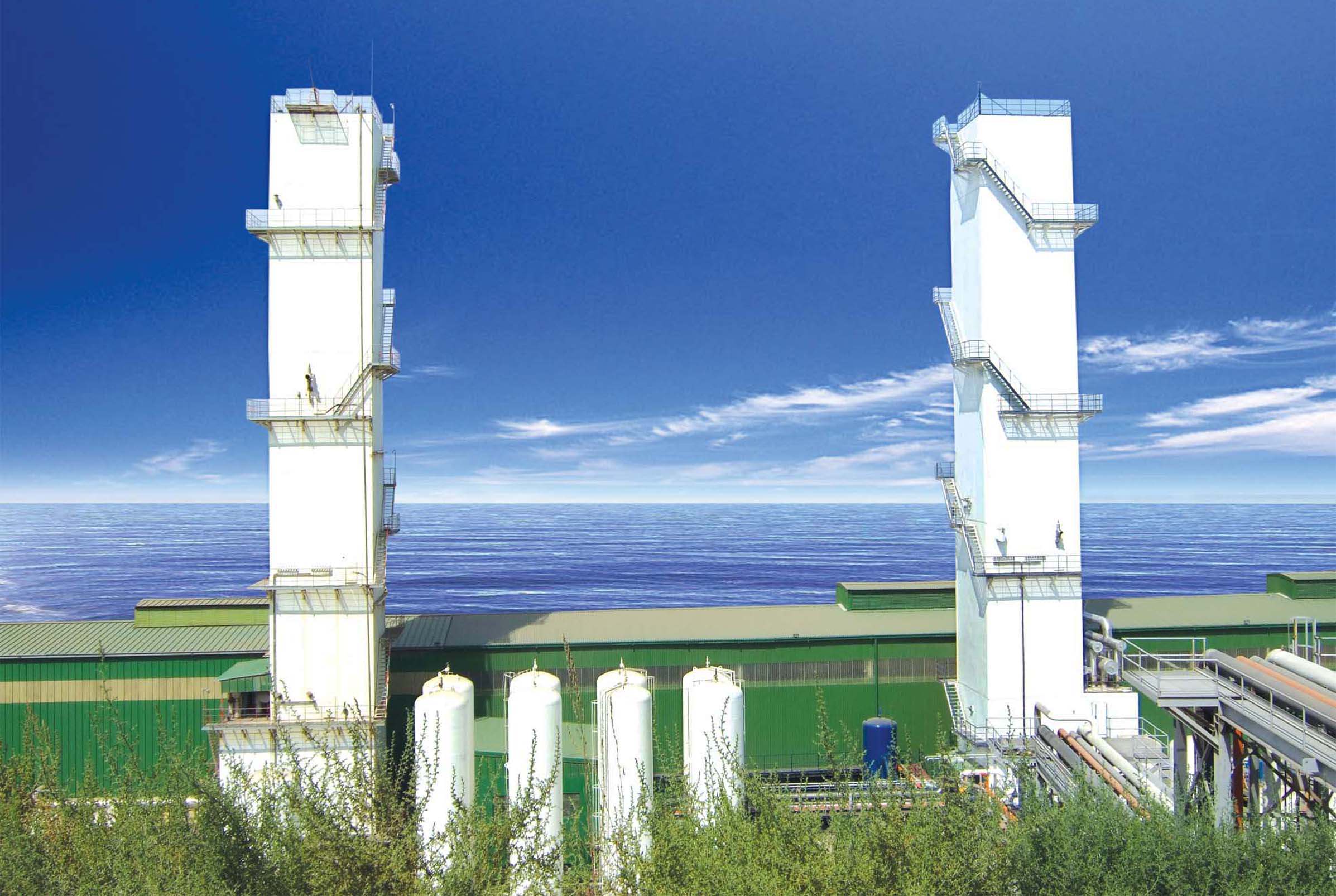
The business model of industrial gas is generally divided into retail model and bulk gas model. Among them, the retail mode is divided into bottled gas mode ( Seamless Steel Gas Cylinder) and liquid gas mode, and the bulk gas mode is divided into pipeline gas supply mode and on-site gas production mode.
In terms of the retail gas market, our country's retail gas market is currently dominated by domestic-funded enterprises, presenting a relatively fragmented market competition pattern in the region. A small number of professional gas production companies coexist with a large number of small and medium-sized distributors in major areas. At the same time, some large foreign-funded enterprises and supporting gas companies retail a small amount of their on-site gas production products to digest the excess production capacity.
The development of our country's defense industry and emerging industries such as chips, semiconductors, electronics, and medical care requires the support and guarantee of a large number of supporting industries. The shortcomings of related supporting industries, such as the gas industry, would severely restrict the development of the defense industry and emerging industries.
Large gas companies such as "Air Liquide", "Messer", "Praxair", "Air Products" and "Linde Gas" monopolize and lead the development of the global gas industry, which occupy 70 % of the market share.
At present, there is no domestic gas company that can compete with the above-mentioned foreign giants in terms of comprehensive strength in technology, R&D and other aspects. Even the listed companies which only focus on equipment manufacturing like Air Separation Plant and Cryogenic Storage Tank, or recovery of ordinary gases such as carbon dioxide.In addition to the late start of the industry, the foreign technology blockade is also an important factor affecting the rise of our industrial gas industry, which in turn affects other important industrial manufacturing fields. Therefore, in recent years, our country has vigorously promoted gas companies in electronic gases and special gases to increase R&D investment in other fields to narrow the gap with foreign countries.
International manufacturers are actively transforming to seize the market, and industrial gas mergers and acquisitions continue. Represented by the Baosteel Gas equity bidding event, domestic industrial gas manufacturers have expanded their scale, explored new business models, carried out coordinated development of air separation equipment manufacturing, and started to integrate resources in the gas industry.
In August 2018, Shanghai Baosteel Gas Co., Ltd. transferred 51% of its equity to complete the mixed reform. The three companies participating in the bidding were the "consortium" formed by Hangyang and Hangzhou Industrial Investment Group Co., Ltd., and Air Products of the United States. , Taimeng Investment Group. There are two reasons for the transfer: one is policy. After the merger of Baosteel and WISCO's two central steel companies, the new group formulated a new development strategy, focusing on the main business and the subsidiary business. The gas sector is due to its own industry nature, retaining equity shares and transferring controlling rights; second, market reasons, large international gas companies continue to enter the domestic market, market development and corporate management costs rise, and if you want to compete with international gas listed companies, you need to continue to invest more costs, which is not conform with Group strategy.
In October 2018, the businesses of Linde and Praxair officially merged. The new "Linde Group" is ahead of France's Air Liquide and becomes the world's largest gas distributor. The new company will occupy a strong position in all major regions and end markets and create a more diversified global investment portfolio. Driven by scale of economies, cost savings and efficiency improvements, the company will achieve annual synergy of approximately US$1.2 billion in the next three years effect.
The industry has large room for development, and the prospects are better under policy support.
Compared with developed countries, our country’s per capita industrial gas consumption is still
at a relatively low level. According to the statistics of per capita industrial gas consumption in 2018, our per capita industrial gas consumption is only 1/26 of that of the United States, which is also relatively low compared to South America and Eastern Europe.