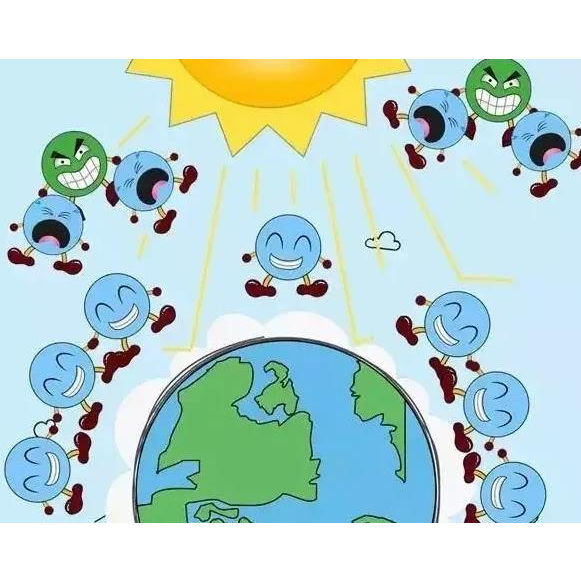

Ozone protects us from the sun's harmful rays.
Ozone is making a comeback in the North American medical community. We are no strangers to the thinning of the ozone layer by the destruction of CFCs. But in fact, the production of ozone in the outer atmosphere depends on the amount of energy from the sun. During the peak period of solar activity, ozone is also produced in large quantities. At the low point of the sunspot cycle, the ozone layer is also thinner. At night, on the dark side of the planet, ozone disappears for a few hours. When the sun rises in the morning, the ozone layer re-forms. There is no ozone over the North and South Pole in winter because there is no sunlight. As long as there is sunlight, ozone is constantly being produced. Ozone is heavier than the atmosphere and it moves towards the ground. While moving, it binds any contaminants it comes in contact with, purifying the air. Once ozone comes into contact with water vapor, it forms hydrogen peroxide, which is also a component of rainwater, which is why rainwater stimulates plant growth more than irrigation water. Ozone is also produced under lightning. The fresh smell in the air after rain comes from ozone.