

For the treatment of arthritis, there are many methods, but the most effective is ozone therapy, which is medically called ozone target joint cavity injection therapy. So how to carry out ozone treatment? Simply put, ozone is injected into the joint cavity. , to achieve the effect of treating diseases.
First, perform intra-articular puncture, and then use normal saline to rinse the joint cavity, rinse the material in the diseased joint cavity, and repeatedly rinse the diseased joint cavity with normal saline to maintain the hygiene of the bone cavity to prevent inflammation. appear. Then you can inject ozone. According to the condition, the doctor will choose the right amount of ozone.
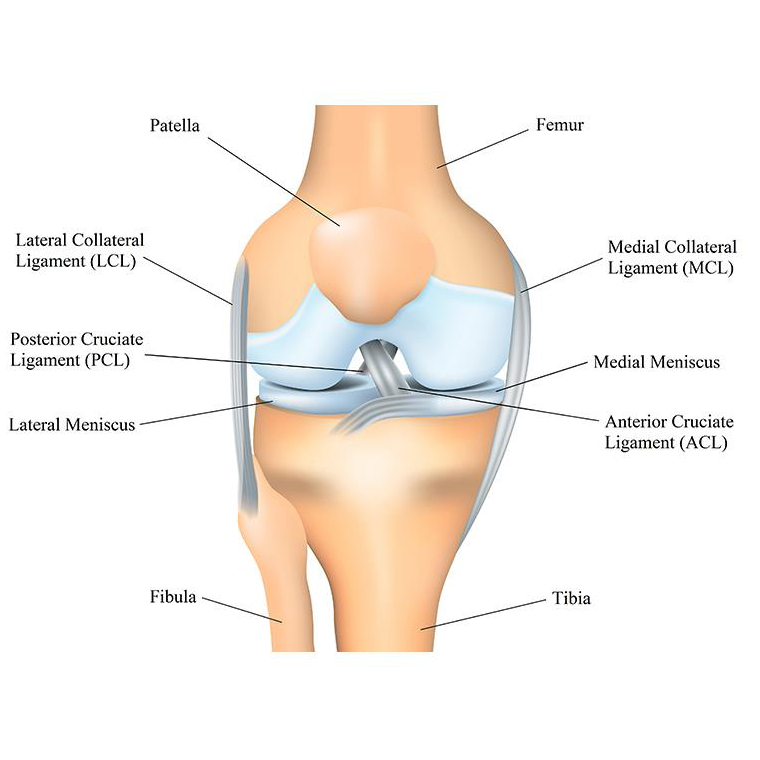
If the joints are excessively involved, it is easy to develop arthritis. Knee arthritis is a common condition. It is more common in middle-aged and elderly people. Patients will experience symptoms of redness, swelling, pain, fluid accumulation and acid accumulation. If treated in time, it will lead to joint deformation and even disability, so we must actively cooperate with the treatment.
So how to treat knee arthritis? After years of clinical practice, ozone has a good effect on the treatment of knee arthritis. Intra-articular injection of ozone can eliminate joint swelling, relieve joint pain, and play an important role in the maintenance of normal joint function. Moreover, ozone treatment of knee joint is not suitable for recurrence and has no side effects. It can be said that it is the only best treatment for arthritis nowadays. treatment solutions.
Classic case strikes
NO.1
Clinical analysis of 37 cases of meniscus injury treated by ozone knee cavity lavage
"Chinese Journal of Misdiagnosis" 2012-3 | Huang Wei Department of Pain, Xinjiang Uygur Autonomous Region Occupational Disease Hospital
Abstract: Objective To evaluate the efficacy of ozone lavage in the treatment of meniscus injury. Methods The knee joints of 37 patients from Xinjiang Uygur Autonomous Region Occupational Disease Hospital were injected with dexamethasone sodium phosphate injection 3mg, lidocaine injection 50mg, 0.9% sodium chloride injection 2ml, 35μg/ml ozone 10 ~20ml, 5~7d after the second treatment. Results 21 cases were cured, 11 cases were effective, 5 cases were ineffective, and the total effective rate was 86.4%. Conclusion Ozone joint cavity lavage therapy can effectively treat mild and moderate knee meniscus injury, and it is an economical, safe and effective treatment method.
NO.2
Nursing experience of ozone combined with sodium hyaluronate knee joint injection in the treatment of knee osteoarthritis
"Massage and Rehabilitation Medicine" 2011-20
Abstract: Knee Osteoarthritis (KOA) is a common and frequently-occurring disease in clinical practice, especially in middle-aged and elderly patients over 50 years old. liquid. There are many treatment methods, non-surgical therapy is generally used in the early and middle stages, and surgical therapy is advocated in the late stage. In our hospital, ozone combined with sodium hyaluronate (SH) knee joint injection is used to treat knee osteoarthritis, and combined with the special care of our department, satisfactory results have been achieved. Medical ozone (O3) is a strong oxidant composed of three oxygen atoms. It is a light blue gas with a special odor and has a half-life of about 20mn at room temperature. It is easily decomposed, soluble in water, and has a larger proportion than O2. . Because of its safety, simplicity, low cost, satisfactory curative effect and wide range of uses, it has been widely used in clinical practice as a new minimally invasive technique in recent years. The report of 152 cases of knee osteoarthritis patients treated with ozone combined with sodium hyaluronate (SH) in our hospital from September 2008 to October 2010 is as follows...
NO.3
51 Cases of Gouty Arthritis Treated by Ozone Intra-articular Injection
"Henan Traditional Chinese Medicine" 2013-07 | Xiong Shixi Sanya Hospital of Traditional Chinese Medicine, Sanya, Hainan 572000
Abstract: Objective: To observe the clinical effect of intra-articular injection of ozone in the treatment of acute attack of gouty arthritis. Methods: Eighty-eight patients were randomly divided into a treatment group of 51 cases and a control group of 37 cases. The treatment group received intra-articular injection of ozone, once a week, for a total of 2 injections. The control group was given oral ibuprofen, twice a day, and the treatment lasted for 2 weeks. The knee pain scores of the two groups were recorded before treatment, 2 weeks after treatment, and 4 weeks after treatment. Results: After treatment, the knee joint pain in the two groups was improved compared with that before treatment (P<0.05); there were significant differences in knee joint pain scores between the two groups at 2 weeks and 4 weeks after treatment (P<0.05). Conclusion: Ozone joint injection has a good clinical effect in the treatment of acute attack of gouty arthritis.
NO.4
Clinical study on ozone treatment of traumatic synovitis of knee joint
《Youjiang Medicine》 2011-05
Abstract: Objective To observe the clinical effect of ozone in the treatment of knee joint traumatic synovitis. Methods 308 patients were randomly divided into ozone therapy group (n=156) and sodium hyaluronate group (n=152). The clinical efficacy and symptom improvement of the two groups were observed respectively. Results ①Comparison of short-term clinical efficacy: the total effective rate of ozone therapy group was 91.67%, and the total effective rate of sodium hyaluronate group was 85.52%, the difference was statistically significant (χ2=9.984, P<0.01); There were also statistically significant differences in the clinical cure rate and markedly effective rate between the two groups (χ2 values were 12.496 and 42.122, P<0.01). ②Comparison of symptom improvement between the two groups: After 2 courses of treatment, there were significant differences in the scores of local swelling, local pain and knee mobility limitation in the ozone treatment group (P<0.01). ③Comparing the pain relief time and swelling subsidence time between the two groups, the difference was statistically significant (P<0.01). ④Long-term curative effect: There was a statistically significant difference in the incidence of adverse reactions and sequelae between the two groups (P<0.01). Conclusion Ozone treatment of knee joint traumatic synovitis has good clinical efficacy and is a safe and effective new technology.
Through the analysis of these cases, we can see that ozone therapy is a newly emerging minimally invasive technique in recent years, which has significant curative effect on various joint diseases. application.