

Properties and uses of oxygen
- physical properties of oxygen
Under normal circumstances, oxygen is a colorless and odorless gas that turns into a light blue liquid or a light blue snowflake-like solid when cooled, slightly denser than air and not easily soluble in water.
- chemical properties of oxygen
Oxygen is a chemically active gas with oxidizing and combustion-supporting properties.
- Reaction of Oxygen with Common Substances
Red phosphorus
It burns in air to produce a yellow flame, burns in oxygen to emit a dazzling white light, releases heat, and produces a lot of white smoke.
Notes: smoke is formed when small solid particles are dispersed and suspended in the air when combustibles are burned; fog is formed by small droplets dispersed and suspended in the air.
Sulphur
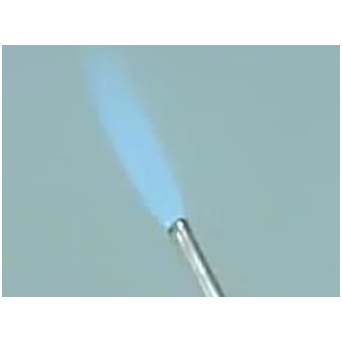
It burns in the air to emit a faint light blue flame, and burns in oxygen to emit a bright blue-purple flame, releasing heat and producing a gas with a pungent odor.
Notes: A small amount of water or lye can be placed at the bottom of the gas collecting bottle to absorb SO2 to prevent air pollution.
Charcoal
It burns in air with continuous red heat, no smoke and no flame; burns in oxygen to emit white light, exothermic, and generates gas that makes clear lime water turbid.
Notes: The crucible tongs holding the charcoal slowly extend into the gas collecting bottle from top to bottom to make full use of the oxygen in the bottle to make the charcoal burn smoothly.
Iron
It burns into red heat in the air, but does not burn; burns in oxygen, sparks radiate, emits heat, and forms a black solid.
Notes: You must use a bright thin iron wire, wrap one end of the iron wire with a match, ignite the match first, and extend it into the oxygen-filled gas cylinder when the match is nearly finished. Put some water or a layer fine sand at the bottom of the gas cylinder, to prevent the resulting melt from splashing down and bursting the bottom of the bottle.
Magnesium
It burns in air with bright white light, exothermic, white solid; burns more violently in oxygen than in air.
Note: Polish the magnesium strips with sandpaper to brighten.
- Uses: Two important uses of oxygen are to support combustion and to supply respiration.
- Hazards: All things have two sides. Oxygen has a beneficial side to people, but it also has a harmful side, such as steel corrosion caused by slow oxidation and food rot.