
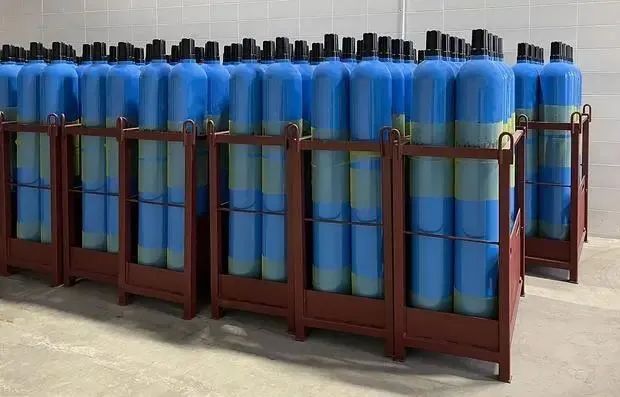
The use of medical gases requires compliance with the following safety regulations:
1. Storage aspect
Medical gases should be stored in dedicated storage facilities, which should be well ventilated, dry, clean, and kept away from sources of fire, heat, and flammable and explosive materials.
Different types of medical gases should be stored separately to prevent danger caused by mixing after gas leakage. For example, oxygen and combustible gases must maintain a sufficient safe distance.
Storage containers should comply with national standards, undergo regular inspections and maintenance to ensure their safety performance. Regular pressure testing and visual inspection should be conducted on pressure cylinders to prevent cylinder rupture or leakage.
2. Transportation aspect
The transportation of medical gases should use specialized transportation vehicles and be operated by professional personnel. Transport vehicles should be equipped with necessary safety equipment, such as fire extinguishers, leak alarm devices, etc.
During transportation, it is necessary to ensure that the gas container is firmly fixed to prevent collision and tipping. For compressed gas, it is necessary to prevent overpressure transportation.
Strictly abide by traffic regulations and avoid transporting medical gases in hazardous environments such as high temperatures and fire sources.
3.In terms of usage
Medical institutions should establish a comprehensive management system for the use of medical gases, clarifying the responsibilities of each department and personnel.
Operators must undergo professional training, familiarize themselves with the properties, usage methods, and safety precautions of medical gases. Before use, check whether the connection of the gas equipment is firm and whether the pipeline is leaking.
For oxygen and other combustion supporting gases, smoking and open flames should be strictly prohibited in the place of use to prevent fires and explosions. At the same time, it is necessary to avoid contact between flammable substances such as oil and oxygen.
Equipment using medical gases should be regularly maintained and serviced to ensure its normal operation. If equipment malfunction or gas leakage is found, it should be stopped immediately and repaired in a timely manner.
When using anesthetic gases such as laughing gas, the dosage and duration of use should be strictly controlled to prevent adverse reactions in patients. At the same time, it is necessary to ensure that the emission of anesthetic gases meets environmental requirements.
4.Monitoring and emergency response aspects
Medical institutions should install medical gas monitoring systems to monitor real-time parameters such as gas pressure, flow rate, concentration, etc., and promptly report any abnormal situations.
Develop emergency plans for medical gas leaks and other emergencies, and conduct regular drills. The emergency plan should include emergency response procedures, personnel evacuation plans, rescue measures, etc.
In the event of medical gas leakage or other accidents, measures should be taken quickly to shut off the gas source, evacuate personnel, and notify relevant departments for handling. At the same time, it is necessary to prevent secondary accidents such as fires and explosions caused by leaked gases.