
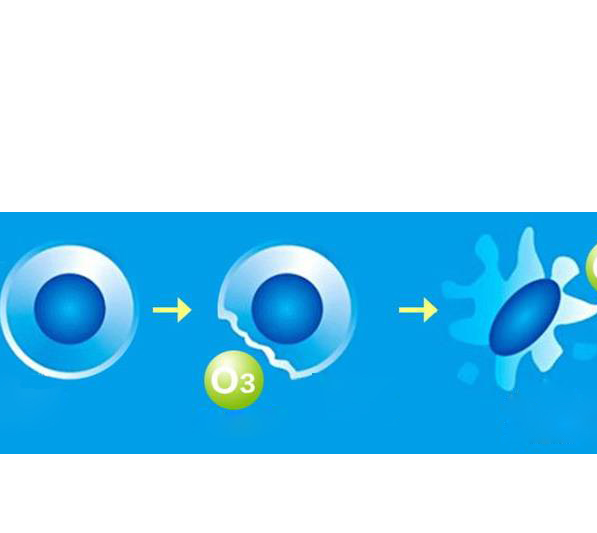
Ozone (O3) is an allotrope of oxygen (O2), a pale blue gas with a characteristic odor. The molecular structure is triangular, the bond angle is 116°, its density is 1.5 times that of oxygen, and its solubility in water is 10 times that of oxygen. Ozone is a strong oxidant. Its redox potential in water is 2.07 eV, second only to fluorine (2.5 eV). It can quickly diffuse into the cell wall, and oxidize and decompose the glucose oxidase necessary for the oxidation of glucose inside the bacteria. Macromolecular polymers such as DNA), RNA, proteins, lipids and polysaccharides disrupt the metabolic and reproductive processes of bacteria. The killing of bacteria by ozone is caused by the rupture of the cell membrane, a process known as cell dissipation, which is caused by the cytoplasm being pulverized in water, and under dissipated conditions the cell cannot regenerate.
It should be pointed out that, unlike hypochlorous acid disinfectants, the bactericidal ability of ozone is not affected by pH changes and ammonia, and its bactericidal ability is 600-3000 times greater than that of chlorine, and its sterilization and disinfection effects occur almost instantaneously. When the ozone concentration in water is 0.3 - 2 mg/L, the bacteria can be killed within 0.5 - 1min. To achieve the same sterilization effect (for example, the killing rate of Escherichia coli can reach 99%), the dosage of ozone water is only 0.0048% of chlorine.
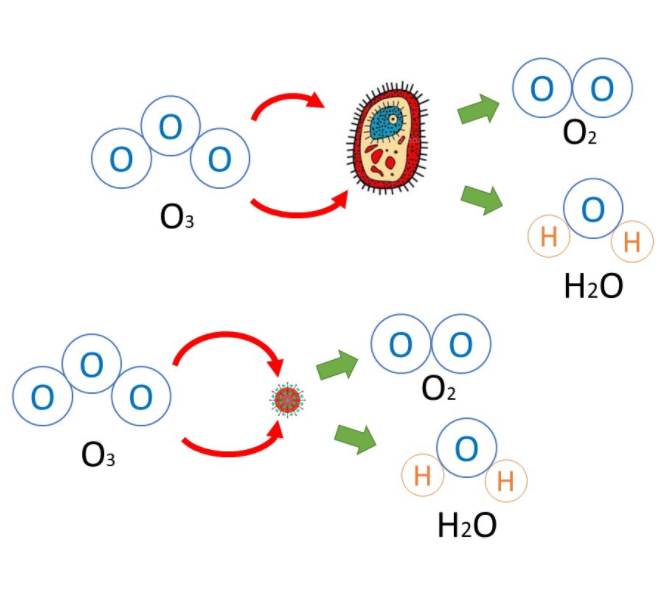
Ozone is also active against yeasts and parasites, etc. For example, it can be used to remove the following types of microorganisms and viruses.
①Virus It has been proved that ozone has a very strong killing effect on viruses. For example, Poloi virus will lose its activity in 2 minutes when the ozone concentration is 0.05 - 0.45 mg/L.
②The cysts were completely removed under the ozone concentration of 0.3 mg/L for 2.4 min.
③Spore Due to the protection of spore coat, its ozone resistance is 10-15 times higher than that of growing bacteria.
④ fungi Candida albicans (candida albicans) and Penicillium (penicillium) can be killed.
⑤ Parasitic organisms (such as mites) were killed after 3 minutes.
⑥ It can quickly kill Escherichia coli, Staphylococcus aureus, Candida albicans and other germs in the air.
⑦ It can decompose the odor, smoke and strong perfume in the air.