
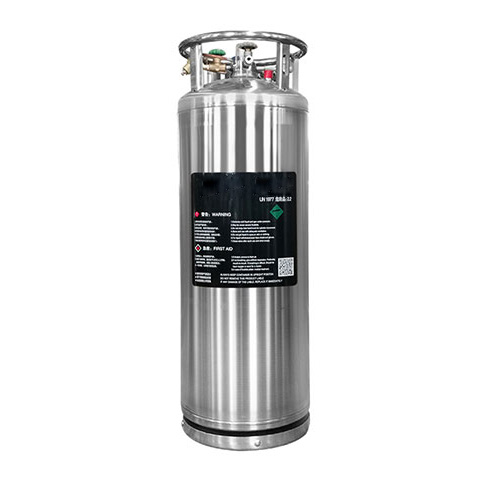
Mainly used in food packaging, food preservation, medicine packaging, medicine replacement gas, medicine delivery atmosphere. The nitrogen produced is usually processed by sterilization, dust removal, water removal, etc. to meet the special requirements of the industry. The food industry does not have high requirements for nitrogen, many with a purity of more than 98% can meet the requirements, and the pharmaceutical industry usually requires nitrogen with a purity of 99.9%. Membrane separation is often used to produce nitrogen in the food industry when the amount of nitrogen is small, and pressure swing adsorption is often used for nitrogen production when the amount of nitrogen is large.
Scientific research and medical Deep hypothermia and cryotherapy, etc.
Medicine and hygiene Pharmaceutical raw materials, nitrogen-filled packaging and transportation of medicines, and anti-moth and antiseptic protection of Chinese herbal medicines.
Beer and beverages Process gas, preservation and storage.
Pharmaceutical industry: nitrogen-filled storage and preservation of traditional Chinese medicine (such as ginseng); nitrogen-filled injections of western medicine; nitrogen-filled storage and containers; air source for pneumatic transportation of medicinal materials, etc.
Medicinal nitrogen equipment (nitrogen purity 99.99%) is based on the experience of professional research and development of pressure swing adsorption nitrogen generators in recent years, and the medicinal nitrogen generators developed according to GMP specifications are compared with cylinder nitrogen (or liquid nitrogen) in use. Low operating cost, stable nitrogen purity and easy operation.
Food industry For food preservation and food storage, food drying and sterilization, food quick freezing, etc.
Nitrogen-filled storage and preservation of fruits, vegetables, tea, etc. is also a most advanced method. This method can make fruits, vegetables, vegetable leaves, etc. in a high nitrogen and low oxygen environment, slow down the metabolism, seem to enter a hibernation state, inhibit after-ripening, so that it can be preserved for a long time. According to the test, the apples stored in nitrogen are still crisp and refreshing after 8 months. Food preservation: nitrogen-filled storage and preservation of grains, fruits, vegetables, etc.; nitrogen-filled fresh-keeping packaging of meat, cheese, mustard, tea and coffee, etc. ; Nitrogen, oxygen and oxygen preservation of fruit juice, raw oil and jam, etc.; purification and coverage of various bottles of wine, etc.
Nitrogen is used to make the grain in a state of dormancy and hypoxia, with slow metabolism, which can achieve good insect-proof, mildew-proof and anti-deterioration effects, and the grain is not polluted.
Using nitrogen to exhaust air to store grains such as rice, wheat, barley, corn and paddy can prevent moth-eaten, no heat, no mildew, so as to ensure the quality of the summer. This method is to tightly seal the food with plastic cloth, first pump it into a low vacuum state, and then fill it with nitrogen with a purity of about 98% until the internal and external pressures are balanced. In this way, the grain piles will be deficient in oxygen, the respiration intensity of the grains will be reduced, and the reproduction of microorganisms will be inhibited. This method of reducing oxygen and killing insects can not only save a lot of cost (about 1% of the cost of fumigation with highly toxic drugs such as zinc phosphide), but also maintain the freshness and nutritional value of food and prevent bacterial infection and drug contamination.
The preservation fee for each kilogram of apples is about 1 cent. Nitrogen-filled storage can greatly reduce the loss of fruit in peak season, and can ensure the supply of fruit in the off-season market, improve the quality of exported fruit, and increase foreign exchange earnings.
The tea leaves are packed with air and nitrogen, that is, the tea leaves are put into a double-layer aluminum-platinum (or nylon polyethylene-aluminum composite foil) bag, the air is removed, nitrogen is injected, and the seal is sealed. After one year, the tea quality is fresh, the tea soup is clear and bright, and the taste is pure and fragrant. Obviously, using this method to keep fresh tea is much better than vacuum packaging and freezing packaging.
At present, many foods still use vacuum packaging, frozen packaging, vacuum packaging is easy to leak, and frozen packaging is easy to deteriorate, and they are not packed with vacuum nitrogen.