
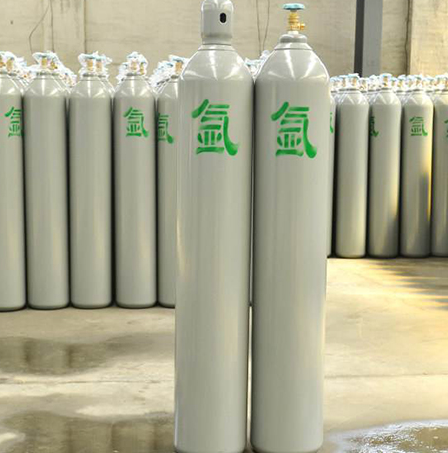
Argon is an inert gas and has no direct harm to the human body. However, after industrial use, the exhaust gas produced is very harmful to the human body may cause silicosis and eye damage.
Although it is an inert gas generally stored in industrial gas cylinders, it is also a suffocating gas, and a large amount of inhalation can cause suffocation. The production site should be ventilated, and technicians engaged in argon gas should have regular occupational disease examinations every year to ensure their health.
Argon itself is non-toxic, but it has a suffocating effect at high concentrations. When the concentration of argon in the air is higher than 33%, there is a danger of suffocation. When the argon concentration exceeds 50%, severe symptoms will appear, and when the concentration reaches 75%, death can occur within a few minutes. Liquid argon can hurt the skin, and eye contact can cause inflammation.
Argon (Ar) is an inert gas that accounts for 0.93% of the earth’s atmosphere
nert gases include argon, helium, krypton, xenon, and sometimes radon. They are very stable and have a low probability of reaction.
Argon is colorless, odorless, tasteless and non-toxic. No compound is known yet. The specific gravity is 1.38, which is 25% heavier than air. Under atmospheric pressure, it becomes liquid at 302 degrees Fahrenheit (186 degrees Celsius). Argon is non-corrosive, non-combustible, low thermal conductivity, and slightly soluble in water.
Industrial uses of argon
Argon is a rare gas that is widely used in industry which can be stored in liquid argon storage tank after produced from air separation plant with argon. It is very inactive in nature, neither burning nor supporting combustion. In aircraft manufacturing, shipbuilding, atomic energy industry and machinery industry sectors, when welding special metals,such as aluminum, magnesium, copper and their alloys, and stainless steel, argon is often used as a welding shielding gas to prevent welding parts from being oxidized or nitridated by air.
In terms of metal smelting, oxygen and argon blowing are important measures for the production of high-quality steel. The argon consumption per ton of steel is 1-3m3. In addition, the smelting of special metals such as titanium, zirconium, germanium, and the electronics industry also need argon as a protective gas.
Aluminum industry---used to replace air or nitrogen, generate an inert atmosphere in the aluminum manufacturing process; help remove unnecessary soluble gases in the degassing process; and remove dissolved hydrogen and other particles in molten aluminum.
Steel making---used to replace gas or steam and prevent oxidation in the process; used to stir molten steel to maintain a constant temperature and the same composition; help remove unwanted soluble gases in the degassing process; as a carrier gas Argon can be used to determine the composition of the sample by chromatography; argon can also be used in the argon-oxygen decarburization process (AOD) used in stainless steel refining to remove carbon monoxide and reduce the loss of chromium.
Metal processing---Argon is used as an inert shielding gas in welding; it provides oxygen- and nitrogen-free protection in annealing and rolling of metals and alloys; and it is used to flush molten metal to eliminate pores in castings.
Electronics--Provide protective atmosphere and heat conduction for germanium and silicon crystals used in ultra-pure semiconductors.
Illumination---Used to inflate white orange lamps and fluorescent bulbs; make blue light in neon lamps.