
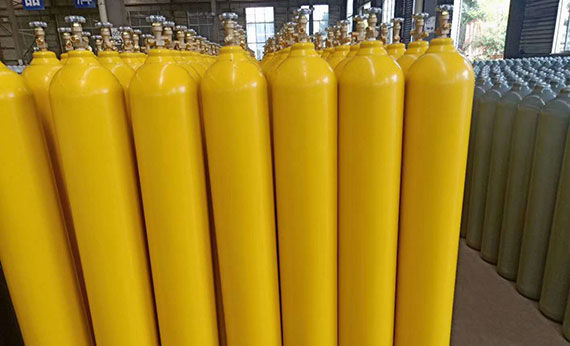
What should I pay attention to when using nitrogen?
Nitrogen is used in many fields, but improper operation will cause safety hazards, so what should we pay attention to when using nitrogen?
- The dangers of nitrogen
When the nitrogen concentration is not too high, you will initially feel chest tightness, shortness of breath, weakness, and then symptoms of restlessness, extreme excitement, running around, shouting, trance, and unsteady gait, which is called "nitrogen tincture". Going into a drowsiness or coma. Inhalation of high concentrations of nitrogen can cause rapid coma and death due to respiratory and cardiac arrest.
- The use of nitrogen precautions
- When using nitrogen gas for air tightness test, equipment and pipelines must be classified according to pressure levels, and blind plates should be added to each other and the connecting valves outside the system to prevent blow-by gas from damaging others; range instrument or close the root valve to prevent damage to instruments, equipment and pipelines due to overpressure; special personnel should be monitored during the charging process to prevent overtemperature and overpressure, and the selected test force is 1.1 times the operating force. During the operation, other on-site operators in the relevant system should be evacuated, and the inspection personnel should pay attention to the side and opposite sides of the flange (cover) when they are stationed. In addition, the treatment of the leakage point should be carried out after the pressure is released, and it is strictly forbidden to deal with it under pressure.
- Nitrogen purging and replacement of the system or equipment. Before replacement, an operation plan should be formulated, the operation process should be determined, and the discharge location should be specified, so as to achieve a clear division of labor and implementation of responsibilities. The discharge port should be set up in a safe place or be monitored by a special person, and the relevant personnel engaged in other operations should be evacuated near the discharge port during operation. The equipment and piping system for purging and replacement must be reliably isolated. All parts and systems that are not related to purging should be closed or isolated with blind plates. The relevant operations are strictly performed according to the schematic diagram of the blind plates, and the summary records of the isolation inspection of the blind plates are attached. When replacing, all blowdown valves or vent valves should be opened one by one to relieve pressure and discharge residual liquid, and the bypass of the front and rear valves of the regulating valve should also be opened.
- The replacement should be based on the difference in the density of nitrogen and the replaced medium, select the nitrogen entry point and the discharge point of the replaced medium, and determine the sampling and analysis site to avoid omission and prevent dead ends. Measure the oxygen content and hydrocarbon gas content at the designated sampling point. The sampling point should be selected at the farthest downstream of the nitrogen replacement port (near the end point and the part that is easy to form a dead angle). After the nitrogen is replaced until the oxygen content is less than 0.5%, the pressure is released to a slightly positive pressure state to maintain the pressure.
- All equipment that needs to be processed (inspected or repaired) must be purged and replaced with air after being purged and replaced by nitrogen, and checked by gas detection. Among them, the gas detection and sampling analysis should be representative and comprehensive. When the equipment volume is large, the upper, middle and lower parts should be sampled and analyzed, and the oxygen content and combustible gas concentration of any part inside the equipment should be qualified at the same time (when the When the explosion limit is greater than 4%, the index is less than 0.5, when the explosion limit is less than 4%, the index is less than 0.1; the oxygen content is 19.5-23.5% is qualified). Pay attention to purging and replacing the places that are easy to accumulate or dead corners inside the equipment. Before purging and replacing with air, the nitrogen valve must be closed, the connecting pipeline should be removed or a blind plate should be added for isolation.
- For equipment that does not need to be handled (inspected or overhauled), after nitrogen purging and replacement are qualified, close the nitrogen valve, remove the connecting pipeline, and decompress the system before disassembling or overhauling. Where there is a danger of nitrogen, which may deprive the surrounding environment of oxygen, appropriate precautions should be taken, such as breathing equipment or oxygen detectors, etc.
- When dismantling and overhauling the cover plate (blind plate) and valve of the container with nitrogen seal, the nitrogen inlet valve must be closed first, and if necessary, a plate will be added to cut off. To enter the nitrogen-sealed equipment, or to enter the nitrogen-sealed equipment, the operator must conduct a second-stage risk assessment while applying for an operation permit and obtain additional authorization to operate. Entering personnel must wear an isolated air gas mask. The two people work together, and there must be a special person outside the equipment opening. It is strictly forbidden to enter and enter without approval.
- When opening the entrance hole or other openings treated by the nitrogen purging replacement process, in order to prevent unauthorized access to the restricted space that may have an oxygen-deficient environment, after all the personnel have left during the operation, the guardians will restore the settings in time.
- Provide good natural ventilation conditions when using liquid nitrogen to install bearings. Operators must undergo special training and strictly abide by operating procedures. Wear cold-resistant gloves to prevent gas leakage into the workplace air.
The operation or use of nitrogen must be cautious to avoid unnecessary safety hazards.
Category: Industry Knowledge